
Shake It Up! - Which Soft Drink Spews The Most When Shaken?
By Kayla • April 3, 2018

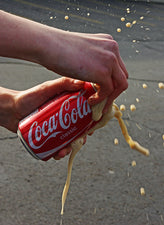
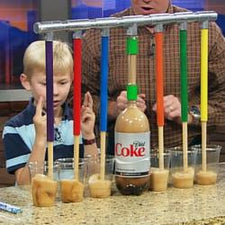
We've all made the unfortunate mistake of opening a shaken can of soda only to have it come spewing out. Whether it was tossed around the trunk of the car on the way home from the grocery store or a friend decided to play a joke, shaking a can of soda causes bubbles of carbon dioxide to line the walls of the can. When the tab is popped and the can is opened, pressure is released, forcing the bubbles to expand. The bubbles need to escape, so they force all of the liquid above them out of the can. Hence, the sticky soda mess!
Ever wonder if different types of soft drinks, when shaken up, spew the same amount? Or if some spew more than others? Great for upper elementary and early middle school students interested in chemistry {and soda!}, gather various types of soft drinks and get shaking!
Things to think about...
- Uniform method for shaking {so all samples are shaken with the same vigor for the same amount of time, etc.}
- Method for measuring the amount of liquid lost to "carbonation spew"
- Method for measuring average initial carbonation of various types of soda {will come in handy when analyzing experiment results}
About the Author

Kayla Johnson










Disclaimer: The content on this page is for informational purposes only and reflects the author's personal experiences and/or opinions. The author is not a financial advisor, medical professional, or licensed expert in any regulated field. Nothing on this page should be interpreted as financial, medical, or professional advice. This content is not a substitute for professional advice, diagnosis, or treatment.
Always consult a qualified professional before making decisions related to your finances, health, or other personal matters. The information provided here is shared in good faith, but individual circumstances vary, and what works for some people may not work for you. Results are not typical, implied, or guaranteed. While we strive for accuracy, information may become outdated or change over time. Statements made by guest authors reflect their own opinions and should not be interpreted as endorsements by SupplyMe.
Some of the links on this page may be affiliate or referral links, which means we may earn a commission or bonus if you use them. There’s no extra cost to you — and it’s a great way to support the site if you find the content helpful.