
Do Snails Have Color Vision?
By Kayla • April 3, 2018

Ever wonder if snails can distinguish one color from another? And, if so, do they show any kind of color preference? Seventh grade California State Science Fair entrant, Andryus K. Planutis, certainly did and designed an experiment to find out. If your child or student has an interest in zoology, this project might be right up their alley!
Project Overview
Planutis designed his project around common garden snails, hypothesizing that if they could distinguish colors and had a color preference, it would be green - the color of their shelter and food. To test this hypothesis, he conducted several experiments. Here's a brief overview:
- Experiment #1: Place a garden snail between two sheets of colored paper - one orange and one light green. Observe and record the reaction of the snail. Planutis collected data on 60 snails.
- Experiment #2: Repeat experiment #1, covering the paper with a large piece of transparent glass to temper the snail's senses, ensuring that their path is not based on smell or pigment taste.
- Experiment #3: Repeat experiment #1, replacing the light green sheet of paper with a dark green piece, to determine whether preference is based on color saturation (i.e. snails always prefer dark colors over light, and vice versa).
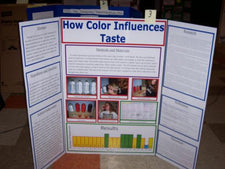
For experiment results, conclusions, and a formal procedure, be sure to visit Planutis' science fair submission to the California State Science Fair.
About the Author

Kayla Johnson













Disclaimer: The content on this page is for informational purposes only and reflects the author's personal experiences and/or opinions. The author is not a financial advisor, medical professional, or licensed expert in any regulated field. Nothing on this page should be interpreted as financial, medical, or professional advice. This content is not a substitute for professional advice, diagnosis, or treatment.
Always consult a qualified professional before making decisions related to your finances, health, or other personal matters. The information provided here is shared in good faith, but individual circumstances vary, and what works for some people may not work for you. Results are not typical, implied, or guaranteed. While we strive for accuracy, information may become outdated or change over time. Statements made by guest authors reflect their own opinions and should not be interpreted as endorsements by SupplyMe.
Some of the links on this page may be affiliate or referral links, which means we may earn a commission or bonus if you use them. There’s no extra cost to you — and it’s a great way to support the site if you find the content helpful.