
Seeing Magnetic Field Patterns in 3D
By Kayla • April 3, 2018

Have a physics enthusiast in your classroom or home? This neat science fair project from Bill Beaty of Science Hobbyist will actually allow your student to explore magnetic field patterns - in 3D!
Magnetic Fields
Magnetic fields, caused by moving electrically charged particles and inherent in magnets, are invisible "bands" that predict how magnetized objects will interact with one another and can be used as a guide to determine which direction a compass will point. Always running in a circle, magnetic fields have no discernible end, can be stretched (like a rubber band), and never cross. Additionally, magnetic fields always start at a magnetized object's north pole and end at its south pole.
Project Overview
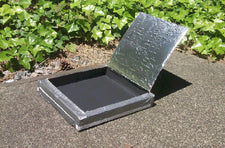
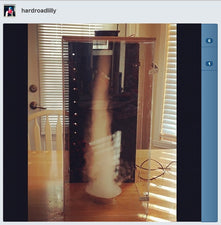
Students will create a magnetic field viewer from common household and workshop items with which to explore various magnetic field patterns. Beaty suggests holding a bar magnets in various positions for comparison:
Use one magnet. Hold it sideways 1/2" to 1" from the bottle.

Use one magnet. Hold it up and down 1/2" to 1" from the bottle.

Use two magnets. Hold them sideways 1/2" to 1" from the bottle. Have like poles directed toward each other.

Use two magnets. Hold them sideways 1/2" to 1" from the bottle. Have opposite poles directed toward each other.

For project instructions, a list of needed materials, a helpful video, and project variations and extensions, be sure to visit Science Hobbyist for the full post!
About the Author

Kayla Johnson














Disclaimer: The content on this page is for informational purposes only and reflects the author's personal experiences and/or opinions. The author is not a financial advisor, medical professional, or licensed expert in any regulated field. Nothing on this page should be interpreted as financial, medical, or professional advice. This content is not a substitute for professional advice, diagnosis, or treatment.
Always consult a qualified professional before making decisions related to your finances, health, or other personal matters. The information provided here is shared in good faith, but individual circumstances vary, and what works for some people may not work for you. Results are not typical, implied, or guaranteed. While we strive for accuracy, information may become outdated or change over time. Statements made by guest authors reflect their own opinions and should not be interpreted as endorsements by SupplyMe.
Some of the links on this page may be affiliate or referral links, which means we may earn a commission or bonus if you use them. There’s no extra cost to you — and it’s a great way to support the site if you find the content helpful.