
Gender & The Stroop Effect
By Kayla • April 3, 2018

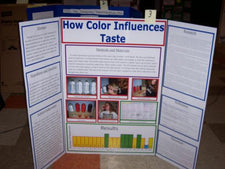
Check out the picture above. As fast as you can, DO NOT read each word, rather try naming the color of each word. It's a little harder than you thought, right? This strange phenomenon, known as the Stroop Effect in honor of it's discoverer, J. Ridley Stroop, shows that the words themselves - and the meanings we attach to them - have a strong influence on our ability to say the color of the word. Sarah, eight grade entrant in the 2009 California State Science Fair, wondered if gender had any effect on an individuals ability to complete this task.
She administered 3 computerized tests to 100 female student volunteers and 100 male student volunteers. As a control, her first two tests timed color recognition and word recognition, while her last test exposed participants to the Stroop Effect.
Be sure to check out Sarah's full entrance application, including results and conclusions! Also, for more information on the Stroop Effect, as well as an example interactive Stroop Effect experiment, we suggest visiting Neuroscience for Kids!
About the Author

Kayla Johnson










Disclaimer: The content on this page is for informational purposes only and reflects the author's personal experiences and/or opinions. The author is not a financial advisor, medical professional, or licensed expert in any regulated field. Nothing on this page should be interpreted as financial, medical, or professional advice. This content is not a substitute for professional advice, diagnosis, or treatment.
Always consult a qualified professional before making decisions related to your finances, health, or other personal matters. The information provided here is shared in good faith, but individual circumstances vary, and what works for some people may not work for you. Results are not typical, implied, or guaranteed. While we strive for accuracy, information may become outdated or change over time. Statements made by guest authors reflect their own opinions and should not be interpreted as endorsements by SupplyMe.
Some of the links on this page may be affiliate or referral links, which means we may earn a commission or bonus if you use them. There’s no extra cost to you — and it’s a great way to support the site if you find the content helpful.