
Poetry Baskets in Preschool
By Kayla • April 3, 2018

Did you know that April is National Poetry Month? When thinking about children and poetry, Poets.org surmises,
"Poetry is the liveliest use of language, and nobody knows more instinctively how to take delight in that playfulness than children."
Poetry is the place where imagination, self-expression, rhyme, and whimsy collide to open up a new literary world. It can seem daunting at first, but with the right foundation, students can learn to appreciate if not love poetry. Mary Ann of Counting Coconuts offers a fantastic idea for incorporating poetry into the preschool classroom - poetry baskets! Poetry Baskets
Here are the important elements of a poetry basket and a few things to remember:
- Choose short, simple poems.
- Look for poetry with great imagery, vocabulary words, and even relevant sight words.
- Print the poem with relevant pictures and clip art to reinforce concepts.
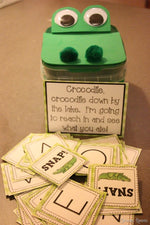
- Add relevant manipulatives to use in acting out the poem and to hold while reading.
Start out by having your students close their eyes and just listen as you read the poem. Discuss the 'mental images' they crafted in their head as they listened. Show your preschoolers the poem printout (with images), discussing why you chose to include each particular image. Throughout the week, invite your students to practice reciting the poem using the pictures as clues. You'll be amazed at how fast they pick it up!
Next, introduce poetry 'reading' by incorporating the text along with the images. As your students recite the lines, follow along, pointing to each word. Provide students with small poetry cards or create a poster of the poem for students to continue this practice during free time or at the literacy center. This is a fantastic exercise for memorizing poetry, practicing one-to-one correspondence, and strengthening reading skills (i.e. following the line from right to left as well as the 'return sweep' from the end of one line back to the start of the next).
About the Author

Kayla Johnson



Disclaimer: The content on this page is for informational purposes only and reflects the author's personal experiences and/or opinions. The author is not a financial advisor, medical professional, or licensed expert in any regulated field. Nothing on this page should be interpreted as financial, medical, or professional advice. This content is not a substitute for professional advice, diagnosis, or treatment.
Always consult a qualified professional before making decisions related to your finances, health, or other personal matters. The information provided here is shared in good faith, but individual circumstances vary, and what works for some people may not work for you. Results are not typical, implied, or guaranteed. While we strive for accuracy, information may become outdated or change over time. Statements made by guest authors reflect their own opinions and should not be interpreted as endorsements by SupplyMe.
Some of the links on this page may be affiliate or referral links, which means we may earn a commission or bonus if you use them. There’s no extra cost to you — and it’s a great way to support the site if you find the content helpful.