
The Science of Pumpkins
By Kayla • April 3, 2018

With fall in full swing, pumpkins make a great subject for science exploration and discovery! So roll up your sleeves and prepare to get a little messy with these excellent pumpkin activities!
Fruit v. Vegetable
Review the characteristics that classify produce as fruits or vegetables. The main point to stress is that, scientifically, if it has seeds, it should be classified as a fruit. Divide students into small groups and provide them with a pumpkin (top pre-cut) and metal spoons. Invite them to determine whether a pumpkin is a fruit or vegetable.
Make Predictions
Discuss with your students what it means to make a prediction. Complete the following exercises:
- Before class, cut a piece of yarn or string. Have students discuss and vote on whether they think the string will be long enough to fit around the entire outside of the pumpkin (it's circumference) or not.
- Fill a large bin with water. Have students vote on whether they think the pumpkin will float or sink.
- After students have discovered that a pumpkin does have seeds and is indeed a fruit, invite them to estimate how many seeds the pumpkin contains.
Measuring
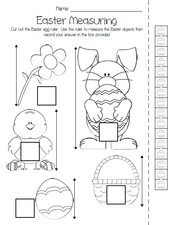
- As an extension of the above prediction exercise, have students measure the pumpkin's circumference using a piece of string and ruler.
- Use a scale to weigh the pumpkin before and after the seeds have been removed to find the weight of the seeds/goop.
- Another extension to the above prediction exercises is to have your students count the seeds. Since there are usually a lot of seeds, have them group seeds into piles of fives or tens to help with increment or interval counting.
For great vocabulary ideas, crafts, books, and sequencing ideas, be sure to read the full post at Science Discovery!
Learn about pumpkins in a Science Curriculum for Preschool and Kindergarten with 75 free complete lesson plans online
About the Author

Kayla Johnson

Disclaimer: The content on this page is for informational purposes only and reflects the author's personal experiences and/or opinions. The author is not a financial advisor, medical professional, or licensed expert in any regulated field. Nothing on this page should be interpreted as financial, medical, or professional advice. This content is not a substitute for professional advice, diagnosis, or treatment.
Always consult a qualified professional before making decisions related to your finances, health, or other personal matters. The information provided here is shared in good faith, but individual circumstances vary, and what works for some people may not work for you. Results are not typical, implied, or guaranteed. While we strive for accuracy, information may become outdated or change over time. Statements made by guest authors reflect their own opinions and should not be interpreted as endorsements by SupplyMe.
Some of the links on this page may be affiliate or referral links, which means we may earn a commission or bonus if you use them. There’s no extra cost to you — and it’s a great way to support the site if you find the content helpful.